

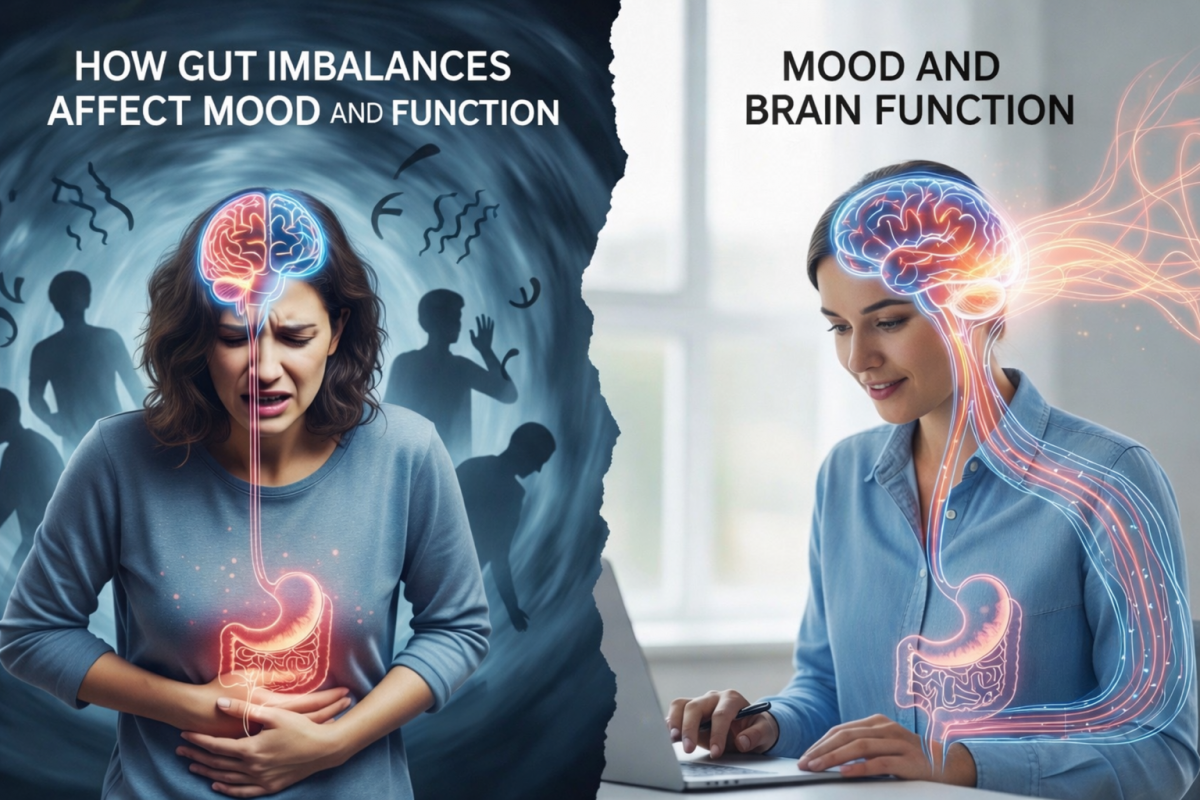
How Gut Imbalances Affect Mood and Brain Function
The gut and brain are closely connected, constantly communicating through nerves, hormones, immune signals, and trillions of gut bacteria. A healthy gut supports steady mood, clear thinking, and emotional resilience, while an imbalanced gut can affect brain function and mental health. Many chemical messengers, including serotonin, which regulates mood, are produced in the gut. Functional medicine addresses these root causes, using personalized strategies to restore gut balance, reduce inflammation, and support long-term emotional and cognitive well-being.
Can Poor Gut Health Cause Anxiety and Depression?
Poor gut health can contribute to anxiety and depression. Imbalances in gut bacteria, chronic inflammation, and reduced nutrient absorption can disrupt brain chemistry and stress regulation.
When harmful bacteria outnumber beneficial ones, inflammation can affect neurotransmitter production, including serotonin and dopamine. Over time, this may cause mood swings, irritability, low motivation, and increased anxiety.
To see why these mood changes occur, it helps to examine the underlying science of gut imbalances and their impact on brain function.
The Science Behind Gut Imbalances and Brain Function
The health of your gut plays a crucial role in brain function, mood, and overall cognitive clarity.
- Inflammation and Brain Health: Gut inflammation can spread to the brain, impacting focus, memory, and mood.
- Intestinal Permeability: A weakened gut lining may trigger immune responses that affect brain chemistry.
- Nutrient Absorption: Poor digestion reduces essential nutrients, leading to fatigue, low focus, and mood changes.
- Stress and Gut Bacteria: Chronic stress disrupts gut microbes, creating a cycle that worsens both gut and brain function.
Common Signs Your Mood Changes May Be Gut-Related
Mood symptoms connected to gut imbalances often appear alongside digestive concerns. These may include:
- Anxiety that worsens after eating
- Ongoing bloating or irregular digestion
- Brain fog
- Sugar cravings and energy crashes
- Chronic fatigue
- Emotional sensitivity during hormonal changes
When digestive and emotional symptoms occur together, it may signal an underlying imbalance rather than separate issues.
What Causes Gut Imbalances?
Several everyday factors can disrupt gut health:
- Frequent antibiotic use
- Diets high in processed foods
- Chronic stress
- Environmental toxin exposure
- Hormonal fluctuations
- Poor sleep habits
Over time, these factors can reduce healthy bacteria and increase inflammation, affecting both digestion and mood.
How Restoring Gut Health Supports Emotional Stability
Improving gut health can positively influence brain function in multiple ways :
- Reducing inflammation supports clearer thinking and steadier mood.
- Restoring healthy bacteria encourages balanced neurotransmitter production.
- Optimizing nutrient absorption improves energy and focus.
- Supporting digestion also helps regulate the stress response, making it easier to feel calm and resilient.
Healing the gut usually requires a comprehensive approach that includes nutrition, lifestyle changes, stress management, and targeted support.
Why Addressing the Root Cause Matters
Many people struggling with anxiety, depression, or brain fog focus only on managing symptoms. While symptom-based treatments can be helpful, they may not address underlying digestive imbalances or chronic inflammation contributing to ongoing issues.
When the root cause remains unresolved, symptoms may persist or return. Looking deeper at digestive health, nutrient levels, hormone balance, and stress patterns often provides important insight into long-term emotional health.
How Functional Medicine Approaches Gut and Mood Imbalances
Functional medicine takes a whole-body approach to understanding how gut health influences mood and brain function. Instead of treating symptoms in isolation, it evaluates how digestion, hormones, immune activity, stress response, and nutrient status work together.
This may involve comprehensive stool testing, evaluation of inflammation, nutrient analysis, and hormone assessment. Based on these findings, a functional medicine practitioner can create a personalized plan that includes nutrition guidance, targeted supplementation, and strategies to support stress regulation.
When to Consider a Functional Medicine Evaluation
You may benefit from further evaluation if you experience:
- Anxiety, along with digestive symptoms
- Depression that has not fully improved
- Persistent brain fog and fatigue
- Recurring digestive flare-ups
- Mood instability during hormonal changes
These patterns often suggest interconnected imbalances that require a comprehensive strategy.
Restoring Balance for Mind and Gut
Gut and brain health are closely connected, with imbalances affecting mood, focus, and overall mental clarity. Addressing root causes such as digestion, hormones, inflammation, and stress rather than just symptoms is essential. At Nourish House Calls, personalized functional medicine strategies help restore gut balance and support lasting emotional and cognitive wellness.
Frequently Asked Questions
How quickly do benefits appear?
Improvements vary by individual, but positive changes in mood and focus are often noticeable within a few weeks to months.
Does gut health affect sleep?
Gut imbalances can disrupt neurotransmitters and hormones, potentially affecting sleep quality and overall energy levels.
Can food sensitivities impact mood?
Undiagnosed food sensitivities can trigger gut inflammation, digestive symptoms, and mood changes such as irritability or brain fog.
How often should gut health be evaluated?
Regular evaluations are recommended if digestive issues, mood changes, or fatigue persist, or if there are significant risk factors.
Which diets support gut and brain health?
Diets rich in fiber, healthy fats, whole foods, and fermented foods promote a healthy microbiome and cognitive function.
