

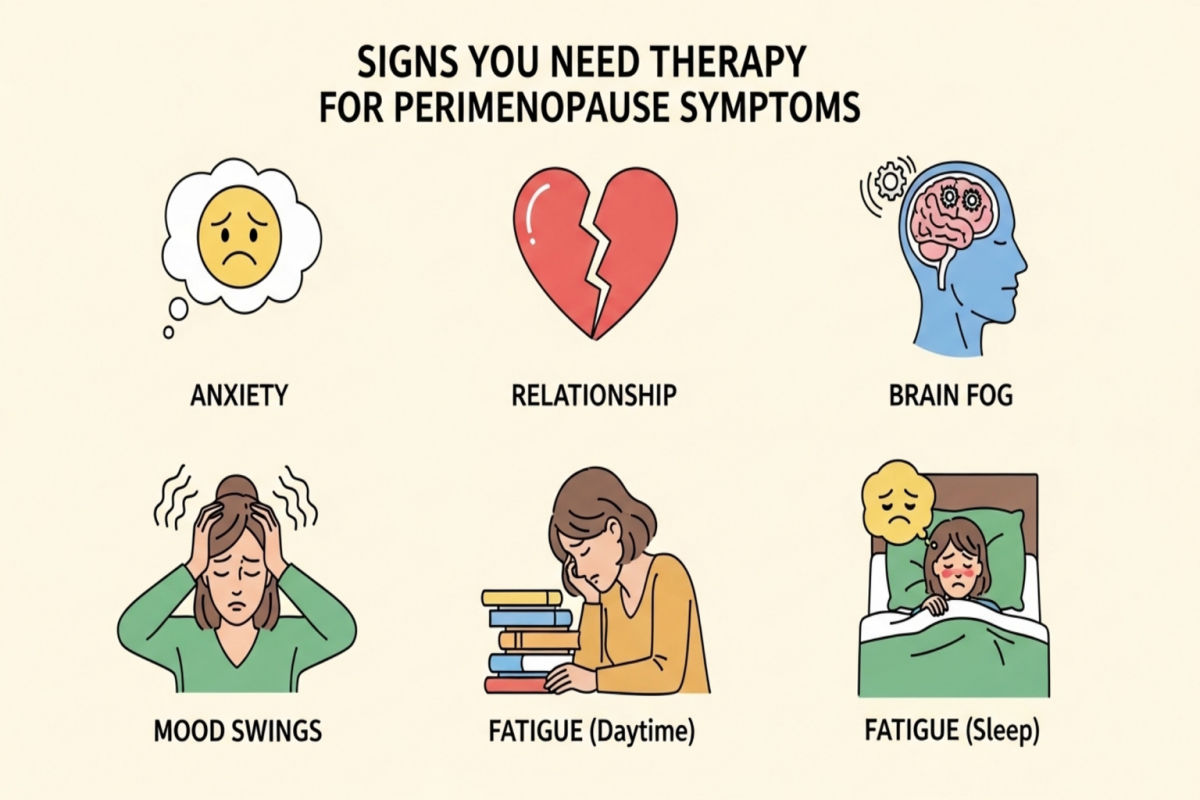
Signs You May Need Professional Therapy for Perimenopause Symptoms
Perimenopause is often treated as something women are expected to tolerate quietly. Symptoms are brushed off as stress or aging, leaving many women unsure whether what they are experiencing is normal or something that deserves attention.
While changes are expected during this phase of life, ongoing or disruptive symptoms are not something you have to manage on your own. Knowing when it may be time to seek professional therapy for perimenopause can help symptoms feel more manageable and less overwhelming.
Professional support is not about labeling a natural transition as a problem. It is about helping your body adjust with more stability, clarity, and confidence.
Understanding When Perimenopause Symptoms Need Professional Support
Perimenopause is defined by hormonal fluctuation rather than steady decline. Estrogen and progesterone levels can rise and fall unpredictably, affecting sleep, mood, energy, metabolism, and stress response.
Because symptoms often come and go, many women question whether support is truly necessary. A simple way to think about it is this. When symptoms start to interfere with daily life, emotional well-being, or your sense of balance, professional therapy for perimenopause may be worth considering.
Common Signs You May Need Professional Therapy for Perimenopause
Ongoing Sleep Disruption
Sleep issues are often one of the earliest signs that perimenopause symptoms may need more support.
You may notice:
- Trouble falling or staying asleep
- Waking early with anxious or racing thoughts
- Night sweats that interrupt sleep
- Feeling tired even after enough time in bed
When sleep problems become ongoing, they affect mood, focus, and physical recovery. Professional therapy can help address both hormonal shifts and nervous system patterns that interfere with rest.
Mood Changes That Feel Hard to Control
Emotional changes during perimenopause are common, but they should not feel overwhelming or unfamiliar.
You may want to seek professional support if you notice:
- Increased anxiety or irritability
- Low mood or emotional flatness
- Sudden mood changes without a clear reason
- Feeling less able to handle everyday stress
When mood symptoms start affecting relationships, work, or self-confidence, professional therapy for perimenopause can help identify what is driving these changes and how to support them.
Brain Fog and Changes in Focus
Cognitive changes are frequently overlooked, yet they are one of the most frustrating symptoms for many women.
You might experience:
- Difficulty concentrating
- Memory lapses
- Mental fatigue
- Trouble organizing thoughts or making decisions
If these changes begin to affect work or daily responsibilities, therapy can help support the hormonal, sleep-related, and stress-related factors involved.
Fatigue That Does Not Improve With Rest
Fatigue during perimenopause often feels different from ordinary tiredness.
Signs that fatigue may need professional attention include:
- Low energy most days
- Feeling drained even after sleep
- Difficulty recovering from stress or exercise
- Relying heavily on caffeine to get through the day
Persistent fatigue is often linked to hormonal changes, stress load, and metabolic shifts that benefit from a more structured approach.
Weight Changes Despite Consistent Habits
Unexpected weight changes can be especially discouraging during perimenopause.
Professional therapy may be helpful if:
- Weight increases despite stable eating and movement habits
- Body fat distribution changes noticeably
- Blood sugar feels harder to manage
- Previous strategies no longer work
These changes are often driven by hormonal fluctuations and stress physiology rather than by a lack of effort.
Hot Flashes and Night Sweats That Disrupt Daily Life
Occasional temperature changes are common during perimenopause. However, frequent or intense symptoms may signal the need for additional support.
Consider professional therapy if:
- Hot flashes interrupt sleep on a regular basis
- Night sweats affect daytime energy
- Symptoms interfere with work or social activities
Therapy for perimenopause can help reduce symptom intensity and improve overall comfort and stability.
Feeling Unlike Yourself
One of the most important signs that professional therapy may be helpful is a lingering sense that something feels off.
This may show up as:
- Reduced motivation or confidence
- Loss of enjoyment in activities you once loved
- Emotional numbness or frequent overwhelm
- Feeling disconnected from your body
These experiences are common, but they should not be ignored or dismissed.
When Lifestyle Changes Are No Longer Enough
Lifestyle support plays an important role during perimenopause. For some women, changes in sleep habits, nutrition, and stress management provide meaningful relief.
However, professional therapy becomes more important when:
- Several symptoms appear at the same time
- Improvements feel inconsistent or short-lived
- Self-guided efforts become frustrating
- Symptoms continue despite healthy routines
At Nourish House Calls, care is designed to look at the full picture rather than treating symptoms one at a time.
What Professional Therapy for Perimenopause Can Help Address
Professional therapy, including comprehensive treatment for perimenopause symptoms, looks at the body as a whole, focusing on hormones, sleep, stress, metabolism, and emotional resilience.
- Hormonal patterns and variability
- Sleep quality and daily rhythms
- Stress response and nervous system balance
- Metabolic health and nutrient needs
- Emotional resilience
Personalized therapy focuses on adapting care as symptoms and hormone patterns change over time.
When to Seek Professional Support
It may be time to explore professional therapy for perimenopause if symptoms are:
- Ongoing or getting worse
- Affecting work, relationships, or daily function
- Taking a toll on emotional well-being
- Being dismissed despite normal test results
Seeking support is not a sign of failure. It is a way to better understand what your body needs during this transition.
Frequently Asked Questions
How do I know if my symptoms are related to perimenopause?
Perimenopause symptoms often involve changes in sleep, mood, energy, focus, and stress tolerance. Symptoms may fluctuate from week to week rather than follow a steady pattern. A provider familiar with perimenopause can help determine whether hormonal changes are contributing to what you are experiencing.
Do I need hormone therapy to feel better during perimenopause?
Not always. Some women benefit from lifestyle and non-hormonal support, while others may need hormone therapy as part of their care. The right approach depends on symptom severity, health history, and personal preferences.
Why do my symptoms feel unpredictable?
During perimenopause, hormones fluctuate rather than decline gradually. These shifts can affect multiple systems at once, which is why symptoms may feel inconsistent or difficult to anticipate.
Can professional therapy help even if my lab results are normal?
Yes. Many women experience significant symptoms despite lab values that fall within normal ranges. Professional therapy focuses on symptom patterns, daily function, and overall well-being rather than lab results alone.
When should I consider working with a provider who specializes in perimenopause?
If symptoms are persistent, affecting quality of life, or leaving you feeling unheard or dismissed, it may be time to seek care from a provider experienced in perimenopause support, such as Nourish House Calls.
Taking the Next Step
Perimenopause is not something women should be expected to push through without guidance. It is a meaningful biological transition that often requires more support than earlier stages of life.
Recognizing the signs that professional therapy for perimenopause may be helpful allows many women to move from uncertainty to clarity and from frustration to balance. With the right support, this phase of life can feel more manageable and far less isolating.
